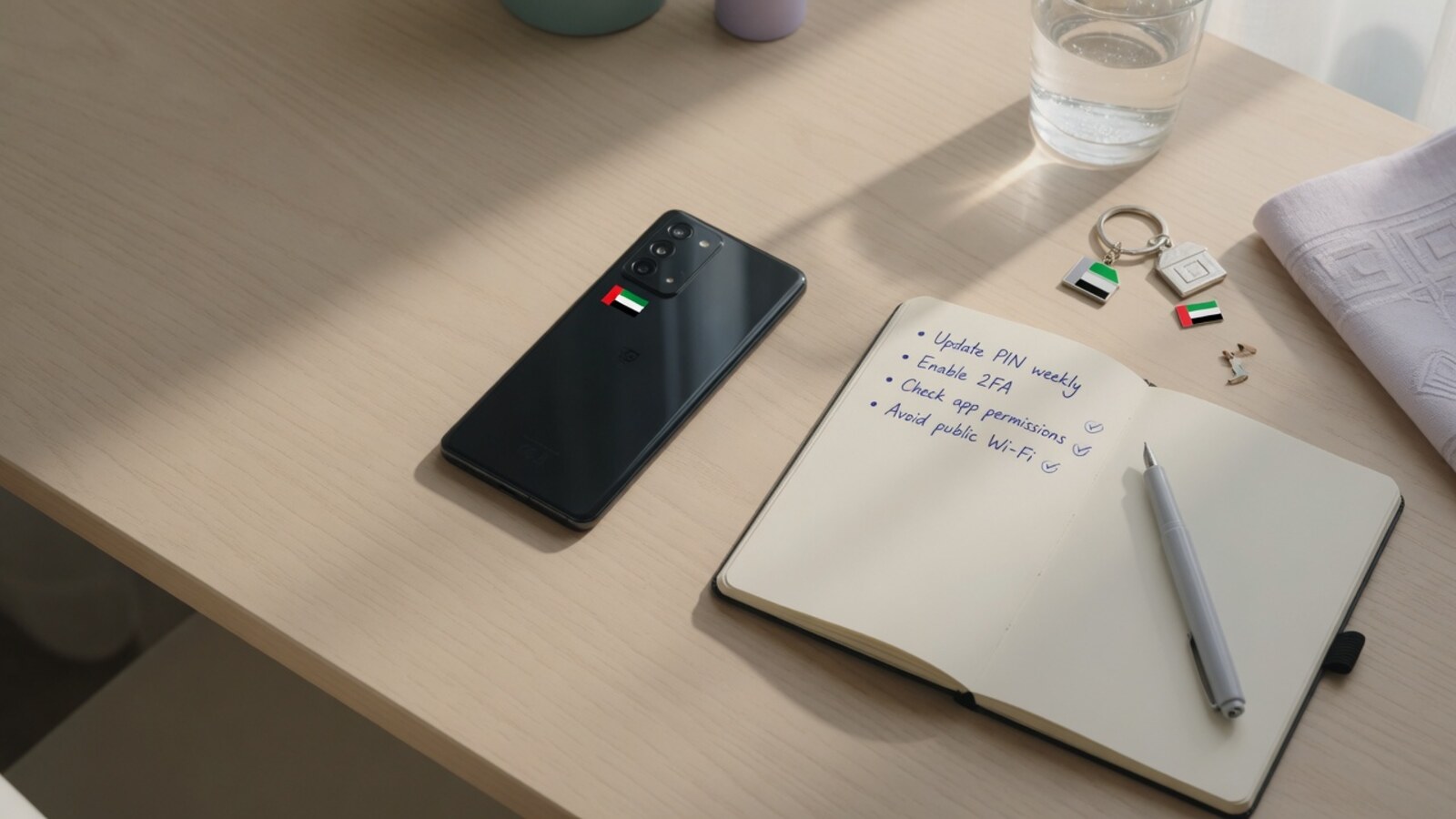
UAE Banking App Security Tips: Account Hygiene and Fees
Manage your UAE mobile banking securely. Learn about minimum balance fees, instant Aani transfers, Emirates ID updates, and card replacement workflows.
You open your banking app on a Tuesday morning in Dubai to transfer rent, only to find an alert requesting an immediate identity update. In the UAE financial system, mobile banking applications act as the main gateway for salary processing, daily transactions, and legal compliance checks.
Keeping your account secure requires more than setting a passcode. In practice, you must manage fixed account thresholds, understand real-time transfer protocols, and handle document verification rules before the bank restricts access.
Fixed Costs and Minimum Financial Thresholds
Opening and maintaining a bank account in the UAE involves clear financial thresholds set by retail banking institutions. For standard resident current accounts, both Abu Dhabi Commercial Bank (ADCB) and Emirates NBD enforce a minimum monthly salary requirement of AED 5,000 for employed residents on company payrolls. If your monthly earnings fall below this threshold or you operate without a company salary transfer, Emirates NBD provides an alternative route that requires a minimum account balance of AED 3,000.
Temporary visitors and tourists also face specific fixed maintenance structures. ADCB offers an Instant Tourist Account accessible via the ADCB Mobile Banking App for individuals physically present in the UAE with a valid visit visa.
This account has a monthly maintenance fee of AED 25, which the bank waives if you maintain a minimum balance of AED 2,500. The account remains active for the length of your stay or up to six months plus a seven-day grace period. However, individuals with 96-hour or transit visas do not qualify for this service.
Variable Expenses: Instant Aani Transfers vs Traditional Payments
Moving funds between accounts involves different channels and costs depending on the option selected inside your app. Standard local transfers rely on your International Bank Account Number (IBAN). In the UAE, every IBAN is exactly 23 characters long and begins with the country code AE, such as AE12 3456 7890 1234 5678 900.
Standard local transfers process strictly during regular banking hours. Clearance takes up to one working day.
For immediate peer-to-peer payments, the UAE Central Bank operates Aani through Al Etihad Payments. Integrated directly into mobile banking apps, Aani allows users to send money 24/7 in seconds using only a mobile number, email address, or QR code without an IBAN. Transactions made through Aani incur no charges for users and operate under the same regulatory oversight as primary bank accounts.
Every transaction requires biometric verification or a dedicated PIN inside the app. If you observe any unrecognized Aani transactions, report them to your bank customer care line immediately. People often forget to check these instant channels regularly as part of their banking app security routine.
To structure your income transfers and rental payments, read our guide on salary transfer and rent cheques in the UAE or learn how to open a bank account as a UAE expat.
Forgotten Costs and Courier Delays During Card Reissues
Debit card expiry often causes unexpected administrative delays. When a card expires, UAE banks typically dispatch a replacement by courier. However, an outdated residential address or mobile number in bank records often prevents delivery. You can check card dispatch status directly within your mobile banking app and update contact details via internet banking or branch submission.
If a replacement card fails to arrive, resolving the delivery through customer support can take up to 15 working days or more. The step newcomers miss is relying on digital wallets or virtual cards during this waiting period.
For new arrivals on digital banking platforms such as Wio, initial account setup gives access to virtual debit cards for Apple Pay and Google Pay before physical card issuance. Wio allows customers to open an account from abroad with a passport and employment visa, but you must upload an Emirates ID and UAE mobile number within 60 days of arrival to maintain active service and unlock physical cards.
Document Expiry Risks and Operational Account Hygiene
A frequent point of confusion among UAE residents is what occurs when an Emirates ID expires. Contrary to popular rumor, bank accounts do not freeze automatically the exact second an Emirates ID lapses. However, UAE Central Bank regulations require commercial banks to maintain current identification documents for all account holders. An expired ID is an official trigger for the bank to request updated customer due-diligence (KYC) documents.
Ignoring these requests carries substantial risk. Banks explicitly state that failing to provide updated KYC documentation will lead to service restrictions on debit cards, outbound transfers, and online banking portals.
If you are abroad when your Emirates ID expires, many institutions allow document uploads through digital KYC portals. To avoid account restrictions, submit your renewed identity card immediately upon issuance.
Long-Term Account Reclassification and Dormancy Terms
When residents leave the UAE permanently or cancel a residency visa, they often wonder whether their bank account will close immediately. Under Article 9(d) of UAE Central Bank Regulation No. 29/2011, an account is not treated as dormant if the customer address remains known or if the account shows active transactions. Furthermore, UAE Central Bank Circular No. 1/2020 specifies that official account dormancy applies only after three years without transactions and without customer communication.
In practice, a cancelled residency visa does not trigger an automatic account shutdown. Instead, banks may reclassify the account as a non-resident account, which may operate under modified terms, conditions, or balance requirements.
For instance, Emirates NBD provides dedicated account options for non-residents through its Priority Banking division. Account holders who relocate abroad must maintain clear contact records with their bank to keep their account active and compliant.

Author
Expat Pocket Editorial
Editor