Downtown vs Business Bay: Weekday Commutes & Daily Expat Life
A practical field report on weekday routines, commute friction, Ejari setup costs, and neighborhood dynamics in Downtown Dubai and Business Bay.
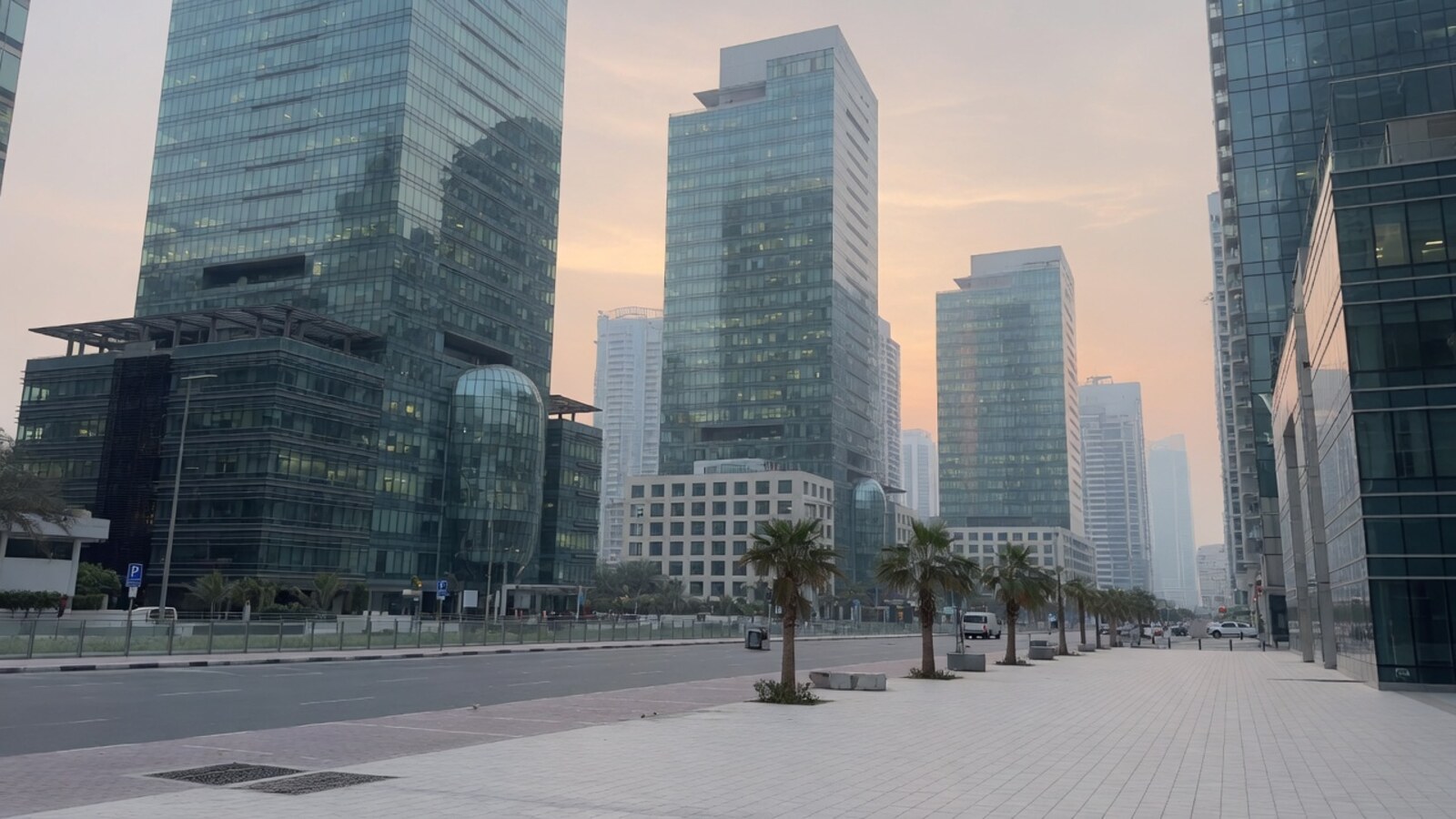
The morning traffic queue backing up from Al Asayel Street into Business Bay moves at a slow crawl while pedestrians walk across the canal footbridge toward office lobbies. This daily flow shows how central Dubai works. The physical distance between Downtown Dubai and Business Bay is negligible on a map, but the practical weekday experience for a resident hinges on commute friction, building access, and setup costs.
Stepping onto the canal bridge as morning traffic builds along Al Asayel Street
The contrast between living in Downtown Dubai and Business Bay becomes clear during peak morning hours. Traffic exiting Al Asayel Street onto Financial Centre Road frequently slows to a crawl. Short vehicle trips become long waits. Professionals residing in Business Bay often walk across canal footbridges to reach office towers, bypassing gridlock entirely.
For a downtown vs business bay expat evaluating daily life, choosing between these adjoining districts comes down to how commute friction affects weekday routines. Downtown offers wide pedestrian walkways around Sheikh Mohammed bin Rashid Boulevard. Walking to corporate headquarters is comfortable during cooler months. In Business Bay, high-density residential towers sit directly alongside commercial office blocks, though pedestrian path connections vary between individual building pods.
Conducting a thorough commute test before signing a lease in Dubai allows incoming residents to observe actual traffic choke points. Living three blocks closer to an office tower does not always mean a shorter commute if driveway access merges into congested feeder roads. In practice, walking routes and building parking exit designs dictate daily travel ease more than geographic proximity.
Waiting at Business Bay Metro Station as feeder buses meet the red line
Public transportation dynamics present another difference between both neighborhoods during working hours. Business Bay Metro Station is a central transit hub for thousands of office workers arriving from across Dubai each morning. The surrounding pavement has heavy foot traffic as commuters walk from metro gates toward nearby commercial towers.
Beyond local metro services, the station is a key connection point for regional shared transport pilots operated by the Dubai Roads and Transport Authority (RTA). Under an official RTA taxi-sharing trial, shared taxis run on designated routes linking Business Bay Metro Station to Al Maktoum International Airport and Dubai World Trade Centre. A full sedan trip on this service costs AED 264, split among passengers as AED 132 each for 2 passengers, AED 88 each for 3 passengers, or AED 66 each for 4 passengers. A van option accommodates up to 6 passengers. Passengers pay using a standard bank card or RTA nol card, which keeps transit costs low for commuters.
Downtown Dubai relies on the Burj Khalifa / Dubai Mall Metro Station, which connects directly to the mall through an enclosed air-conditioned travelator. This elevated walkway provides relief from summer heat, but the long path adds walking time to daily routines. Expats who rely on public transit must weigh the outdoor walk in Business Bay against the long indoor walk in Downtown.
Settling into a boulevard cafe desk before afternoon WPS payroll files process
Remote workers and hybrid professionals frequently use cafe spaces along Sheikh Mohammed bin Rashid Boulevard and the Marasi Drive canal promenade. Both areas offer outdoor seating and high-speed Wi-Fi for remote business tasks. However, managing residency and banking requires following specific UAE regulatory frameworks.
Expats with the Virtual Work Residence Visa can live in Dubai while working remotely for employers located outside the UAE, provided they show proof of remote employment and a minimum monthly salary of USD 3,500. This virtual work visa gives residency status. It does not authorize an individual to work as a self-employed freelancer or invoice UAE clients without a separate freelance permit or company licence. Applicants must submit proof of employment from a current employer along with a salary certificate.
Salary distribution for Dubai-based employment follows the Wage Protection System (WPS), where timing depends on bank processing cut-off windows. RAKBANK processes WPS salary files submitted between 8:00 AM and 3:00 PM on the same business day. Files submitted after 3:00 PM, on Sundays, or on public holidays process on the next business day. When payroll appears delayed, confirming the exact submission timestamp with HR helps determine when funds will post.
Living next door to your office tower sounds ideal until peak traffic turns a simple canal crossing into an extended standstill.
Accounting for DEWA setup and Dubai Municipality fees when signing the tenancy agreement
Securing an apartment in Downtown Dubai or Business Bay requires budgeting for setup fees beyond the annual rent and security deposit. In Dubai, tenancy agreements must be registered through the Ejari system maintained by the Dubai Land Department, which costs a registration fee of around AED 220. Knowing these upfront costs prevents cash flow surprises during your first month.
Setting up utility services with the Dubai Electricity and Water Authority (DEWA) involves refundable deposits and non-refundable connection charges. DEWA requires a refundable security deposit of AED 2,000 for an apartment or AED 4,000 for a villa. Tenants also pay activation charges of AED 125 for a small meter or AED 300 for a large meter, plus AED 30 in total registration, knowledge, and innovation fees (broken down as AED 10 for each fee).
Tenants must factor in the Dubai Municipality housing fee, which equals 5% of the annual rental value on the Ejari contract. This fee is calculated annually and divided across monthly DEWA utility bills throughout the lease term. Reviewing these utility costs helps when deciding between a hotel apartment vs annual lease in the UAE.
Transitioning from remote work to formal corporate licensing in central Dubai
Many working expats in central Dubai eventually move from remote work contracts to establishing corporate entities or free zone companies. Free zone jurisdictions across the UAE allow legal entities, including foreign corporations, to be corporate shareholders during business setup. Establishing a company in a free zone requires submitting corporate documents, including a certificate of incorporation, memorandum of association, and a board resolution.
Corporate financial management requires business banking compatible with payment processors. Stripe supports payouts to UAE company bank accounts, so sole establishments, free zone entities, and LLCs can receive funds into verified local accounts. Wise can accept payouts from Stripe, but business owners cannot fund Wise transfers directly from Stripe or automatically transfer funds from PayPal unless account parameters align.
Families relocating to Downtown or Business Bay must comply with local civic regulations regarding schooling and healthcare. Under Dubai Health Authority guidelines, the UAE National Immunization Program covers all resident children. Expat families must present complete child vaccination records during Dubai school enrolment. In addition, expats moving to the UAE for the first time pay no VAT or customs duty on the first-time import of their used personal effects and household goods.
Maintaining peaceful residential living requires respecting building guidelines and community standards across both districts. Reading about neighbour etiquette in apartment towers helps avoid common friction points regarding shared amenities, balcony use, and late-hour noise. For any downtown vs business bay expat balancing corporate efficiency with domestic comfort, small daily habits determine overall long-term satisfaction.

Author
Expat Pocket Editorial
Editor